


What Is Airtightness — And Why It Matters for Your Dream Home
Airtightness is one of the most important — and often overlooked — factors in building an energy-efficient home. Get it right, and you’ll enjoy lower bills, greater comfort, and a healthier living environment.
Introduction.
When planning a bespoke home, energy efficiency is no longer a “nice to have” — it’s a fundamental part of how your home performs day to day. One of the key drivers behind this performance is airtightness, which directly affects both your comfort and your running costs.
In simple terms, airtightness determines how much uncontrolled air leaks in and out of your home. The better this is managed, the more stable your internal environment becomes — reducing heat loss in winter, keeping your home cooler in summer, and lowering your reliance on mechanical heating and cooling.
At Mosaic Bespoke, we consider airtightness from the very beginning of the design process. It’s not something that can be retrofitted easily — it must be designed in and carefully delivered on site.
Understanding Airtightness.
Airtightness refers to how effectively a building prevents unwanted air leakage through its envelope — including walls, roofs, windows, doors, and junctions. Even small gaps can allow significant heat to escape, leading to energy loss and inconsistent internal temperatures.
A well-sealed home minimises these leaks, helping maintain a comfortable and controlled indoor climate. This not only improves energy efficiency but also eliminates drafts, reduces noise ingress, and supports better overall building performance.
The Evolution of Airtightness Standards.
A decade ago, airtightness standards in the UK were far less demanding. In the early 2010s, new homes in England and Wales were permitted air permeability rates of up to 10 m³/h.m² at 50 Pascals — allowing a considerable amount of heat to escape.
Today, expectations have shifted significantly. While current Building Regulations (Part L) still set a maximum of 10 m³/h.m², most well-designed homes perform far better, typically achieving below 5 m³/h.m². High-performance builds — including many of our projects — aim for sub-4 m³/h.m² or lower.
Airtightness is verified through a blower door test, where a calibrated fan is used to measure how much air escapes from the building. This ensures the home performs as intended and meets — or exceeds — regulatory requirements.
In This Article
- → Introduction
- → Understanding Airtightness
- → Standards & Regulations
- → Achieving Airtightness
- → Key Takeaways
Ready to Start?
Get early-stage clarity on your project — viability, planning potential, and costs — with a free Project Appraisal.
“The more airtight your home, the less energy it needs to stay comfortable — and the more consistent that comfort becomes throughout the year.”
— Kevin Edge, Founder, Mosaic Bespoke
Achieving Superior Airtightness.
Delivering high levels of airtightness requires careful coordination between design and construction. It begins with specifying continuous air barriers, high-performance windows and doors, and detailing every junction to prevent unintended gaps.
On site, execution is just as critical. This includes the correct use of membranes, tapes, and sealants, along with regular inspections to ensure standards are maintained throughout the build. Without this attention to detail, even the best designs can fall short.
Beyond energy savings, airtight homes offer tangible lifestyle benefits — improved comfort, reduced drafts, better moisture control, and a healthier internal environment. For clients investing in a bespoke home, it’s one of the most valuable performance upgrades you can prioritise.
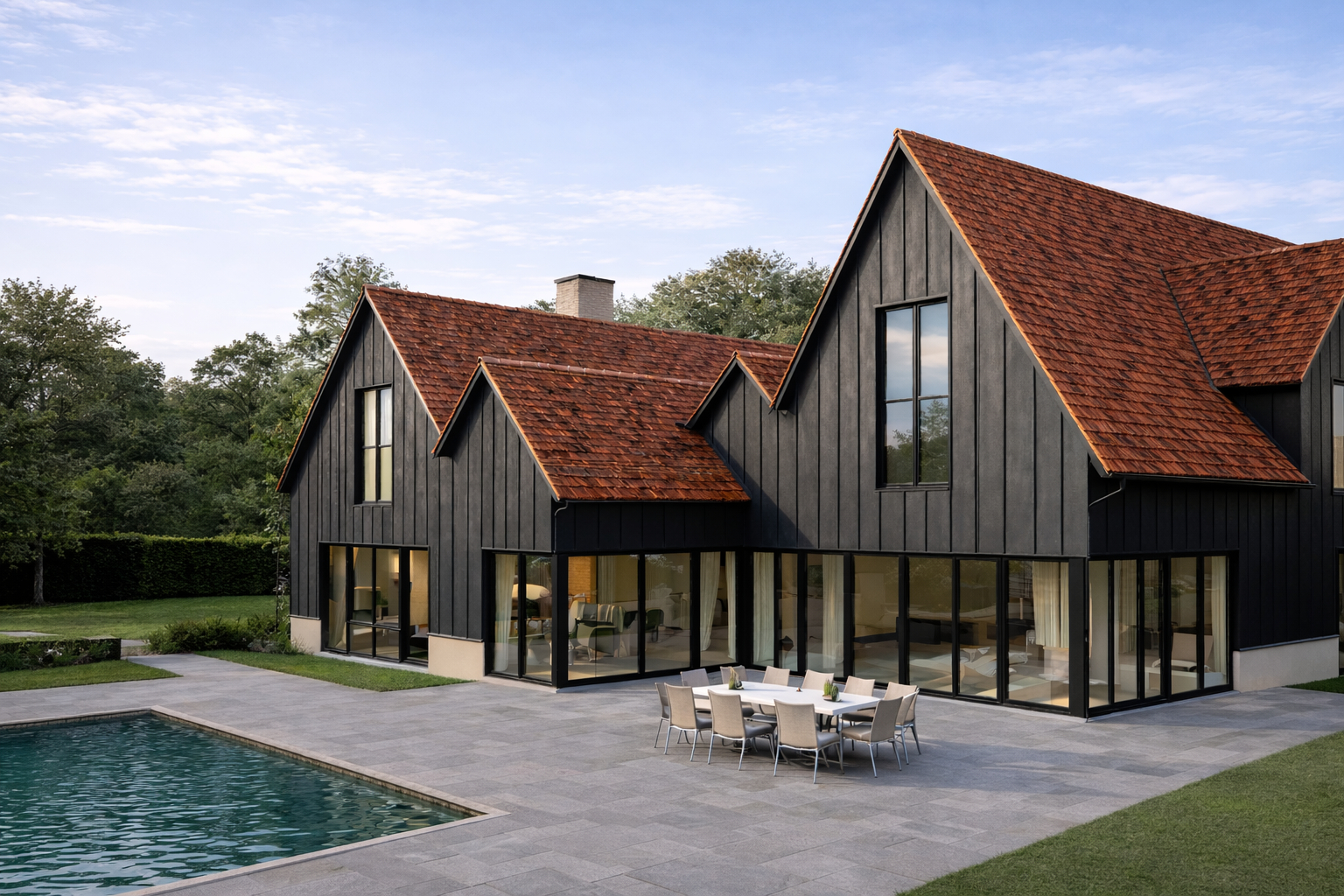
Airtight construction requires precision at every stage — from initial design detailing through to on-site execution.
Key Takeaways.
- → Airtightness directly impacts energy efficiency, comfort, and long-term running costs.
- → Modern homes significantly outperform older standards, often achieving less than half the permitted air leakage.
- → Blower door testing verifies performance and ensures compliance with Building Regulations.
- → Achieving excellent airtightness requires both thoughtful design and disciplined on-site execution.
- → Investing in airtightness delivers lasting value through lower bills, better comfort, and a more sustainable home.
About the Author
Kevin Edge is the founder of Mosaic Bespoke Ltd, a planning-led bespoke home builder working with private clients and landowners across Hertfordshire. With over two decades of experience in planning, design, and construction, Kevin leads every project with a focus on clarity, quality, and long-term value.
Filed under: Guidance · Planning · Bespoke New Homes
Considering a Luxury New Home?
If you’re planning a bespoke new build and want clarity before committing, our project appraisal process helps you understand viability, planning potential, costs, and risks at an early stage.