
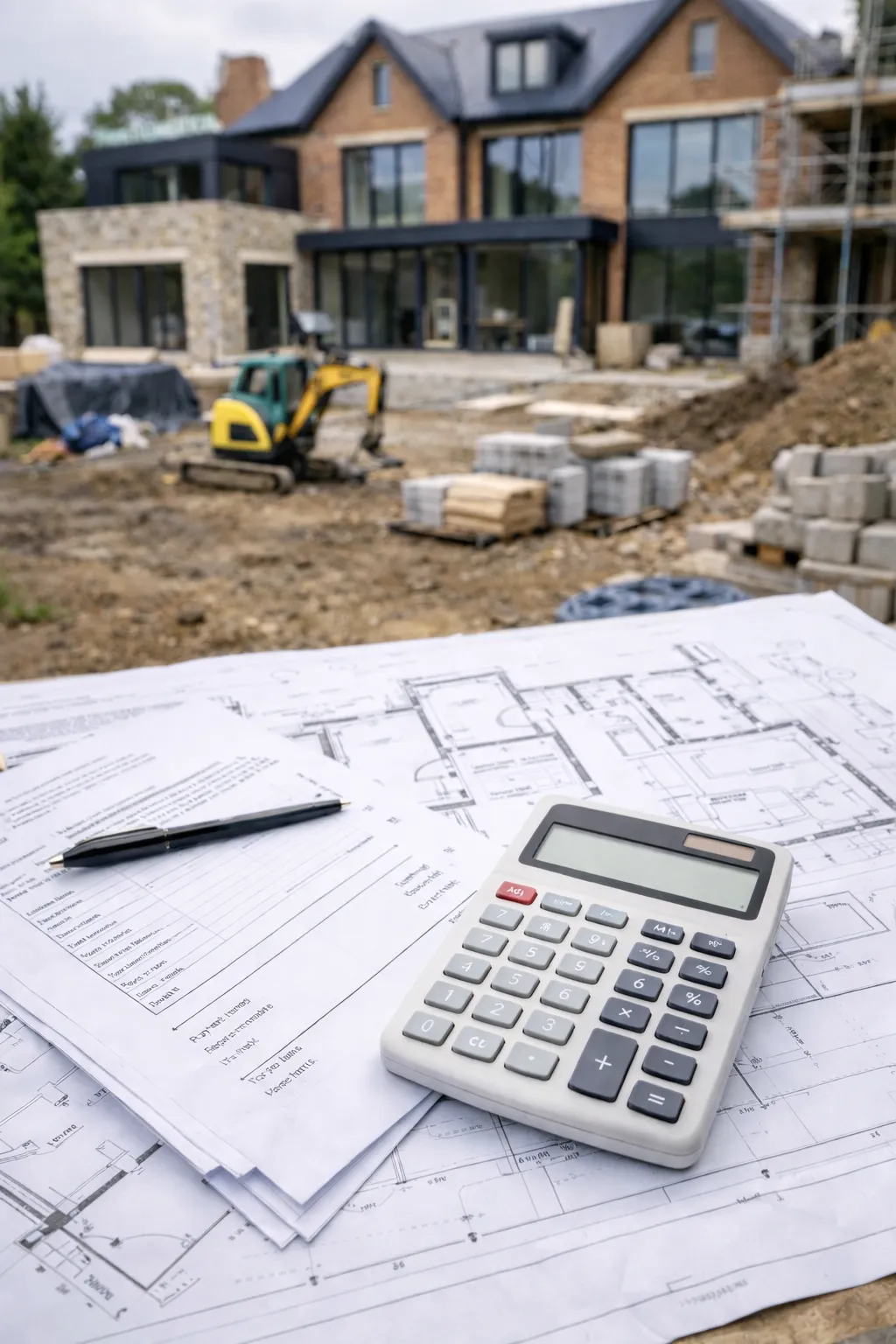
Why Most Home Build Budgets Go Wrong – And How the Right Process Prevents It
For many homeowners, the most worrying part of building or renovating a home isn’t the planning system or the disruption it’s the fear of costs spiralling out of control.
In today’s market, build costs are higher, supply chains remain unpredictable, and planning conditions are more complex than ever. Yet many people still commit to design and planning without fully understanding what their project is likely to cost or why.
The result? Beautiful designs that exceed budgets, painful compromises late in the process, and unnecessary stress for families investing significant sums into their homes.
This article explains why budgets so often go wrong and how a structured, professional process can protect both your money and your peace of mind.
Why Budget Overruns Are So Common in Home Builds
Most cost problems don’t happen on site. They happen long before construction begins.

Design Without Cost Reality
Many projects start with design-led enthusiasm layouts, glazing, materials and features are explored before anyone has pressure-tested the numbers.
Without early cost modelling, designs can drift beyond what the budget can realistically support. When costs finally surface, homeowners are forced into redesigns, delays, or compromises that undermine the original vision.
Hidden Site and Planning Constraints
Ground conditions, access limitations, drainage requirements, planning conditions and local authority demands all affect cost often significantly.
If these aren’t identified early, they appear later as “unexpected” extras, even though they were always there.
False Certainty from Early Estimates
Rough cost-per-square-metre figures can be useful at concept stage, but they are not budgets.
Without allowances for complexity, specification, risk and programme, early figures often create a false sense of affordability that unravels as the project develops.
The Difference Between Guessing Costs and Planning Them
Cost certainty isn’t about locking everything down on day one. It’s about making informed decisions in the right order.
A well-structured process does three critical things:
Tests design ambition against financial reality
Identifies risk before it becomes expensive
Gives homeowners clear decision points before committing further time or money
This is where professional planning and feasibility work changes outcomes.
What a Proper Feasibility Process Actually Delivers
A feasibility study is not just a report, it’s a decision-making tool.
Done properly, it provides clarity across five key areas:
Realistic Budget Ranges
Rather than a single headline number, feasibility work establishes cost ranges, showing where flexibility exists and where it doesn’t.
This allows informed trade-offs early, before drawings are finalised or applications submitted.
Planning and Technical Insight
Understanding likely planning constraints, conditions, and technical requirements early prevents costly redesign later.
This includes:
Local planning policy risk
Likely consultant requirements
Discharge conditions that affect programme and cash flow
Buildability and Programme Logic
Some designs look straightforward on paper but are complex to build.
Feasibility reviews how the project would actually be delivered, not just how it looks.
Cash Flow Awareness
Knowing when money will be required is just as important as knowing how much.
A good feasibility study highlights funding pinch points and helps homeowners plan with confidence.
How Mosaic Bespoke Uses Feasibility to De-Risk Projects
At Mosaic Bespoke, feasibility is not a sales exercise, it’s a safeguard.
Our feasibility stage is designed to answer one simple question:
“Should this project move forward, and if so, how?”
It includes:
Technical and planning review
Budget ranges informed by current market data
Design strategy aligned to cost reality
Early risk identification
Clear next-step recommendations
For many clients, this stage either confirms confidence to proceed, or saves them from an expensive mistake.
From Feasibility to Full Design and Build
Once feasibility confirms viability, the project can move forward with confidence.
Because Mosaic Bespoke delivers design and build under one roof, the thinking doesn’t reset at each stage. The same cost logic, technical understanding and planning strategy flows through:
Detailed design
Planning submissions
Pre-construction coordination
Fixed-price delivery
This continuity removes the gaps where cost overruns usually hide.
Conclusion
Most home build budget problems aren’t caused by bad luck, they’re caused by decisions made too early, without enough information.
A structured process protects your investment by:
Testing ambition against reality
Identifying risk before it becomes expensive
Giving you clarity before commitment
Whether you’re exploring ideas or preparing to move forward, the smartest projects start with understanding, not assumption.
Clarity always comes first.